
Some Mexican dishes are comforting. Others are celebratory. Chile en nogada is both, but it also carries something more: a sense of place, season, and national memory.
At first glance, the connection is easy to see. A green poblano chile, a white walnut sauce, and bright red pomegranate seeds mirror the colors of the Mexican flag. But its meaning goes beyond a tricolor presentation. This is a dish tied to Puebla’s harvest season, centuries of culinary exchange, and the rituals that return each year around Mexico’s Independence celebrations.
For many families, a plate of chile en nogada signals that late summer has arrived. It is a recipe that takes time, calls for special ingredients, and rewards a table willing to linger.
What exactly is chile en nogada?
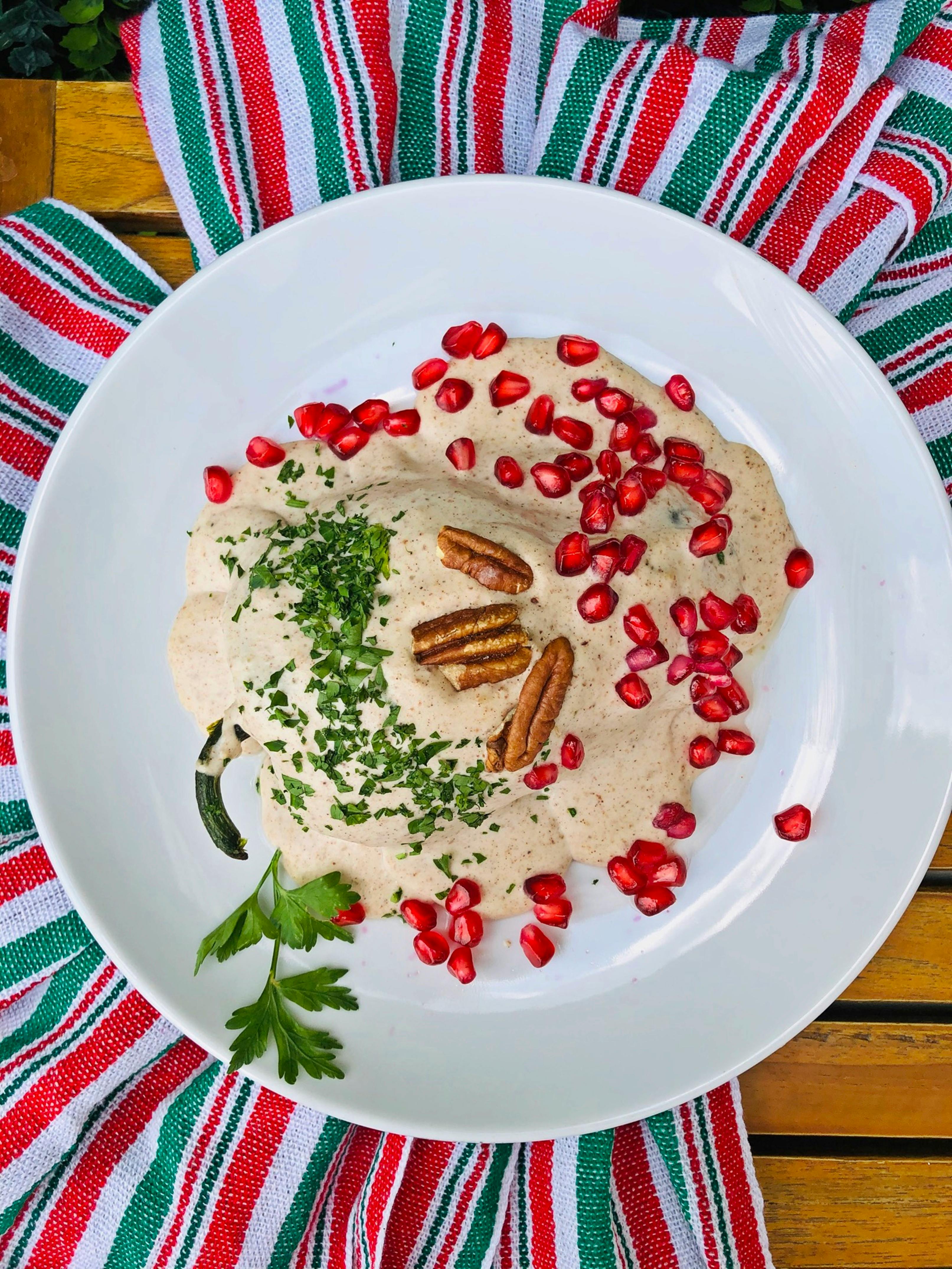
Chile en nogada begins with a poblano pepper, usually roasted, peeled, and filled with picadillo. The filling is where the dish starts to show its character: savory meat is balanced with fruit such as apple, pear, peach, or plantain, along with nuts, dried fruit, spices, and sometimes capers or olives.
The stuffed chile is then covered in nogada, a creamy sauce traditionally made with fresh walnuts. A shower of pomegranate seeds and parsley finishes the plate.
The experience is intentionally layered. The chile may bring gentle heat and smokiness. The filling moves between savory, fruity, and lightly sweet notes. The walnut sauce adds richness, while pomegranate brings freshness and a subtle pop of acidity.
That contrast is part of why a good chile en nogada feels so distinctive. It is not meant to taste like one single thing.
The colors are meaningful, but they are not the whole story
The visual symbolism is unmistakable. Green comes from the poblano and parsley, white from the nogada, and red from the pomegranate. Together, they evoke the Mexican flag and have made the dish a natural fixture of Independence Day season.
Still, reducing chile en nogada to its colors misses what makes it endure. Its patriotic appeal works because the ingredients are not arbitrary decoration. They arrive at the same time of year: poblano chiles, fruit, fresh walnuts, and pomegranates are all associated with late summer and early fall.
The dish therefore looks festive because the season itself provides the palette. That connection between the local harvest and the national calendar gives chile en nogada a depth that a year-round imitation cannot always capture.

Puebla and the story that became part of the dish
Chile en nogada is closely identified with Puebla, a city whose cooking reflects Indigenous ingredients, Spanish influences, convent kitchens, trade routes, and regional agriculture.
A popular tradition says Augustinian nuns in Puebla prepared the dish in 1821 to honor Agustín de Iturbide as Mexico moved toward independence. The dish’s green, white, and red presentation is often connected to the Army of the Three Guarantees and the emerging national identity of the period.
It is a powerful story, and it remains central to how many people understand the dish. Yet, as with many historic recipes, the full story is more nuanced. Versions of walnut sauces and stuffed chiles existed before the independence era, and the dish likely developed through evolving regional cooking rather than appearing fully formed in a single kitchen on a single day.
That does not make the legend less meaningful. It shows how food stories work: a recipe can carry cultural truth even when its exact origin has more than one chapter.

Why chile en nogada is a seasonal celebration
Fresh walnuts and pomegranates are central to the character of the dish, not optional flourishes. When they are in season, the nogada can taste delicately nutty and fresh rather than heavy, while the pomegranate provides the brightness that keeps each bite alive.
The fruits used in the filling matter just as much. Their ripeness, sweetness, and texture help create the sweet-savory balance that defines a traditional version. This is why chile en nogada is often treated as a limited seasonal offering instead of an everyday menu item.
Its short window makes the occasion feel special. Preparing it can involve roasting and peeling chiles, chopping several ingredients, making the filling, blending the sauce, and carefully assembling each plate. It is food made for celebration, conversation, and sharing.
A dish that holds several Mexicos at once
Chile en nogada represents Mexican cuisine at one of its most expressive. The poblano chile points to ingredients cultivated in Mexico long before the colonial period. Walnuts, dairy, meat, spices, and fruit reflect the culinary exchange that shaped Mexican kitchens over generations.
The result is neither entirely sweet nor entirely savory, neither simple nor excessive by accident. Its complexity is deliberate. Each element has a role, and the dish works best when no one flavor overwhelms the others.
That is why chile en nogada remains so symbolic. It is a celebration of Mexican independence, certainly. It is also a reminder that Mexican food culture is built from regional ingredients, shared traditions, and recipes that become more meaningful each time they are brought back to the table.
Why every version can feel personal
There is no single chile en nogada experience. Recipes vary from one household to another, and restaurants often make thoughtful choices about the balance of fruit, meat, spice, sweetness, and walnut sauce.
Some cooks serve the chile capeado, coated in a light egg batter and fried before it is covered in nogada. Others prefer it without batter, allowing the roasted poblano to take center stage. Some fillings lean more savory; others highlight the fruit. The sauce may be richer or more delicate depending on the walnuts, cheese, milk, and seasoning used.
These differences are not necessarily departures from tradition. They are evidence that tradition is alive.
A meaningful chile en nogada should still feel balanced. The sauce should complement rather than bury the chile, the fruit should support the savory filling instead of turning it into dessert, and the pomegranate should add brightness to the final bite.
What makes a memorable chile en nogada?
The best versions tend to share a few qualities, even when the recipe itself varies.
- The poblano is tender but still holds its shape.
- The filling has contrast, with savory ingredients, fruit, and seasoning clearly present.
- The nogada tastes like fresh walnut, not simply cream.
- Pomegranate adds a crisp, juicy finish.
- The dish feels composed rather than overloaded.
It is also a dish that rewards patience. Chile en nogada is often served at room temperature or only slightly cool, which lets the filling and sauce show their individual flavors. It may surprise diners expecting a hot, spicy chile relleno, but that contrast is part of its charm.
This is a dish to eat slowly. Each forkful brings together creaminess, fruit, savory depth, freshness, and the gentle warmth of the pepper.
More than a patriotic plate
The dish’s connection to Mexican Independence Day has helped make it recognizable far beyond Puebla. Yet its importance is more intimate than a national holiday menu.
For people who grew up with the tradition, chile en nogada can bring back a particular time of year: the first pomegranates at the market, family recipes pulled out for a special meal, and tables set for celebrations in August and September. For visitors, it can be an invitation to experience Mexican cuisine beyond the familiar favorites.
That emotional connection is why the dish continues to matter. It is elaborate without feeling distant. It is festive, but grounded in ingredients that tell a story about regional land and labor.
A taste of tradition at RJ Mexican Cuisine
Authentic Mexican cooking is at its best when it honors both flavor and context. A dish like chile en nogada reminds us that recipes are more than instructions: they carry seasons, regions, and the people who keep them meaningful.
At RJ Mexican Cuisine, Mexican food is an opportunity to gather around dishes with real cultural roots. Whether you are discovering chile en nogada for the first time or revisiting a favorite seasonal tradition, the experience is about more than what is on the plate. It is about sharing a meal that has a story to tell.
The lasting meaning of chile en nogada
Chile en nogada remains one of Mexico’s most symbolic dishes because it brings so many ideas together at once. Its colors evoke national pride. Its ingredients celebrate Puebla’s seasonal harvest. Its history blends legend with culinary evolution. And its place at the table turns a national tradition into a personal one.
It is a dish that asks for attention, from the hands that prepare it to the people who enjoy it. In return, it offers something rare: a taste of Mexico’s history, creativity, and generosity in every bite.